Data Room Features: What Actually Matters for Startups
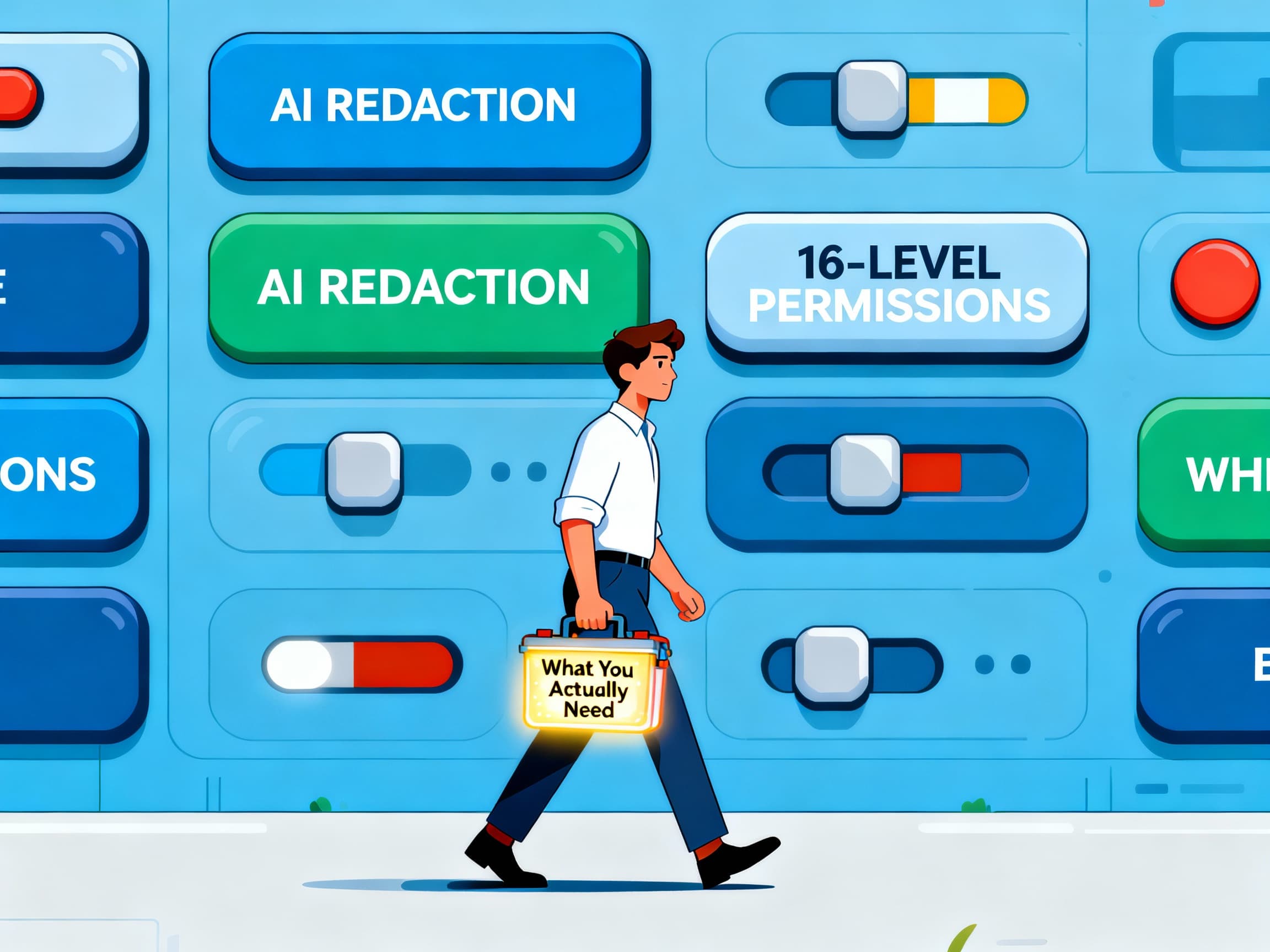
Search for "data room features" and you'll find endless lists of enterprise capabilities: AI-powered redaction, 16-level permission hierarchies, Q&A workflow management, fence view technology, and compliance certifications you've never heard of.
It's overwhelming. And if you're a pre-seed or seed founder, it's almost entirely irrelevant to you. (If you're comparing different data room solutions, see our complete data room comparison guide.)
Most data room feature lists are written for enterprise document management—M&A bankers and corporate development teams managing billion-dollar deals. They're not written for founders raising their first $500K who need secure document sharing without spending their entire runway on software.
This guide cuts through the noise. We'll show you which features actually matter at pre-seed and seed, which ones are overkill, and how to evaluate data rooms without getting distracted by enterprise bells and whistles you'll never use.
Why Most Feature Lists Are Misleading
Data room vendors love feature lists. The longer the list, the more "enterprise-ready" they seem. But here's what they don't tell you:
- Most features exist for M&A, not fundraising. Q&A workflows? That's for legal teams coordinating during acquisitions. AI redaction? That's for scrubbing PII from thousands of HR documents. You're sharing a pitch deck and a cap table.
- More features often mean more complexity. Enterprise tools require training, onboarding calls, and dedicated account managers. You need something that works in 5 minutes.
- Features you don't use still cost money. When you pay $250-500/month for a mid-market VDR, you're subsidizing features built for Series C companies. That's runway you're burning.
The question isn't "which data room has the most features?" The question is: "which features do I actually need to share my pitch deck, cap table, and financials professionally at my stage?"
The question isn't "which data room has the most features?"
Essential Data Room Features for Pre-Seed and Seed
If you're raising your first rounds, here are the features worth paying attention to when investors begin due diligence—and why they matter for impressing them:
1. Predefined Folder Structure
What it is: A ready-made folder organization based on what investors expect to see.
Why it matters: First-time founders often don't know how to structure a data room. Should financials go in "Finance" or "Investor Materials"? Where do founder agreements belong? A predefined structure removes the guesswork and ensures you're organized the way investors expect.
The investor angle: When investors open your data room and immediately find what they're looking for, it signals competence. When they have to hunt through random folders, it signals chaos—and they start wondering what else is disorganized.
2. Document Checklist
What it is: A comprehensive list of documents investors expect at your stage, with clear indicators of what's missing.
Why it matters: Nothing kills momentum like an investor asking for a document you don't have ready. A good checklist shows you exactly what you need—and what you're missing—before investors notice the gaps.
The investor angle: Missing documents raise red flags. Did you forget? Do you not have it? Are you hiding something? A complete data room shows you've done your homework. An incomplete one invites skepticism.
3. AI-Powered Organization
What it is: Automatic categorization and sorting of your documents into the right folders.
Why it matters: You're a founder—you should be building your product, not spending hours organizing PDFs. AI organization lets you upload documents and have them automatically sorted, saving time and reducing errors.
The investor angle: Investors don't care who got your documents organized—they just care that they are in the right place. AI helps you deliver a polished result without the manual effort.
4. Activity Tracking and Analytics
What it is: Tracking of who accessed your data room, what they viewed, how long they spent, and what they downloaded.
Why it matters: This is the single most valuable feature for fundraising. When you share documents with 20 investors, analytics tell you which ones are actually interested. Did they spend 15 minutes on your financials or 10 seconds on the pitch deck? That intelligence shapes your follow-up strategy.
The investor angle: Investors don't know you're tracking this—but you should be. It helps you focus energy on warm leads instead of chasing ghosts.
5. Clean, Professional Interface
What it is: A modern, uncluttered design that presents your documents professionally.
Why it matters: Your data room is part of your brand. A sleek, organized interface signals that you're a modern, capable team. A cluttered, outdated interface signals... the opposite.
The investor angle: Investors review dozens of startups. First impressions matter. A professional-looking data room stands out; a janky one gets forgotten.
6. Basic Access Control and Data Privacy
What it is: The ability to control who can view your documents, revoke access when needed, and set link expiration.
Why it matters: You're sharing sensitive information—financials, cap tables, contracts. Your data room should use encryption to protect these documents, and you need to control who sees what and be able to cut off access if a conversation goes cold or an investor becomes a competitor.
What you don't need: 16-level permission hierarchies. At pre-seed and seed, "can view" and "can download" is usually enough. Save the complex permissions for when you're managing multiple buyer teams in an M&A process.
7. Instant Setup (No Sales Calls)
What it is: The ability to sign up, create a data room, and share it with investors in minutes—without demos, onboarding calls, or enterprise sales processes.
Why it matters: When an investor asks for your data room, you need to respond fast. Momentum matters in fundraising. If you have to schedule a demo, wait for approval, and sit through onboarding, you've lost days—and potentially the deal.
The investor angle: Fast response signals you're on top of things. Delays signal disorganization. Every day you make an investor wait is a day they're looking at other deals.
8. Transparent, Affordable Pricing
What it is: Clear pricing on the website—no "contact sales" black boxes—at a price point that makes sense for startups without revenue.
Why it matters: You're a pre-seed or seed startup. By definition, you don't have thousands of dollars to spend on software. You need a solution that's free or costs less than $50/month—not one that requires a budget approval process.
The reality: Most VDRs hide their pricing because they charge $250-500/month or more. If you have to "request a quote," it's probably not built for you.
Quick Reference: Features That Matter vs. Overkill
| Feature | Pre-Seed / Seed | Series A+ / M&A |
|---|---|---|
| Predefined folder structure | Essential | Expected |
| Document checklist | Essential | Helpful |
| AI-powered organization | Very helpful | Nice to have |
| Activity log / analytics | Essential | Essential |
| Clean, professional interface | Essential | Expected |
| Basic access control | Essential | Need more granular |
| Instant setup | Essential | Less critical |
| Free or <$50/month pricing | Essential | Can afford more |
| 16-level permissions | Overkill | Useful for complex deals |
| AI-powered redaction | Overkill | M&A necessity |
| Q&A workflow management | Overkill | M&A necessity |
| Fence view / screen shields | Overkill | High-security deals |
| 24/7 phone support | Overkill | Time-critical closings |
| Custom branding / white-label | Nice to have | More important |
Virtual Data Room Features You Don't Need (Yet)
Let's be specific about what you can ignore at pre-seed and seed:
- AI-powered redaction: This is for scrubbing sensitive information from thousands of documents in M&A. You're sharing a handful of PDFs.
- 16-level permission hierarchies: Built for complex deals with multiple buyer teams, legal reviewers, and management. You need "can view" and "can download."
- Q&A workflow management: This manages formal question-and-answer processes between legal teams during M&A. Your investors will just email you.
- Fence view / screen shields: Prevents screenshots by obscuring parts of the document. Overkill for seed-stage pitch decks.
- 24/7 phone support: Critical when you're closing a billion-dollar acquisition at 2am. Not critical when you're sharing a cap table.
- ISO 27001 certification / SOC 2 Type II / HIPAA compliance: Important for regulated industries and enterprise clients. Basic SOC 2 compliance is fine for early-stage fundraising—you don't need full ISO 27001 certification for your seed round.
- Per-page or per-GB pricing: A legacy pricing model that benefits no one except the vendor. Avoid.
Every one of these features adds cost. When you're paying $250-500/month for a VDR, a significant portion is going toward capabilities you'll never use. That's money that should be extending your runway or building your product.
How to Evaluate Data Room Features (Simple Checklist)
When you're comparing data rooms for pre-seed or seed fundraising, run through this checklist:
- Can I sign up and create a data room in under 10 minutes? If it requires a demo or sales call, it's not built for you.
- Is pricing transparent and under $50/month? If you have to "contact sales," assume it's too expensive.
- Does it have a predefined folder structure? You shouldn't have to guess what goes where.
- Does it show me what documents I'm missing? A checklist prevents embarrassing gaps.
- Can I see who viewed my documents and for how long? Analytics are non-negotiable for fundraising.
- Does it look professional? Investors are judging. The interface matters.
- Can I control and revoke access easily? Basic security is essential; complex permissions are not.
If a data room checks all these boxes, it's probably right for your stage. If it's missing several, keep looking. If it has 50 additional features you don't recognize, it's probably overkill (and overpriced).
Data Room Features That Actually Matter for Seed Funding
At pre-seed and seed, you don't need a data room with 100 features. You need one with the right features—the ones that help you look professional, stay organized, and understand which investors are actually interested.
Remember: investors are evaluating you from the moment they click your link. A clean, well-organized data room signals competence. A confusing enterprise tool—or a messy Google Drive folder—signals the opposite.
Don't pay for features you don't need. Don't burn the runway on enterprise software built for M&A bankers. Find a tool that's purpose-built for founders at your stage, at a price that respects your reality.
Looking for the best data room for startups? Paperwork.vc is built specifically for pre-seed and seed founders. We include the features that matter—predefined structure, document checklist, AI organization, activity tracking, and a clean professional interface—without the enterprise bloat or pricing. Get investor-ready in minutes at paperwork.vc.